
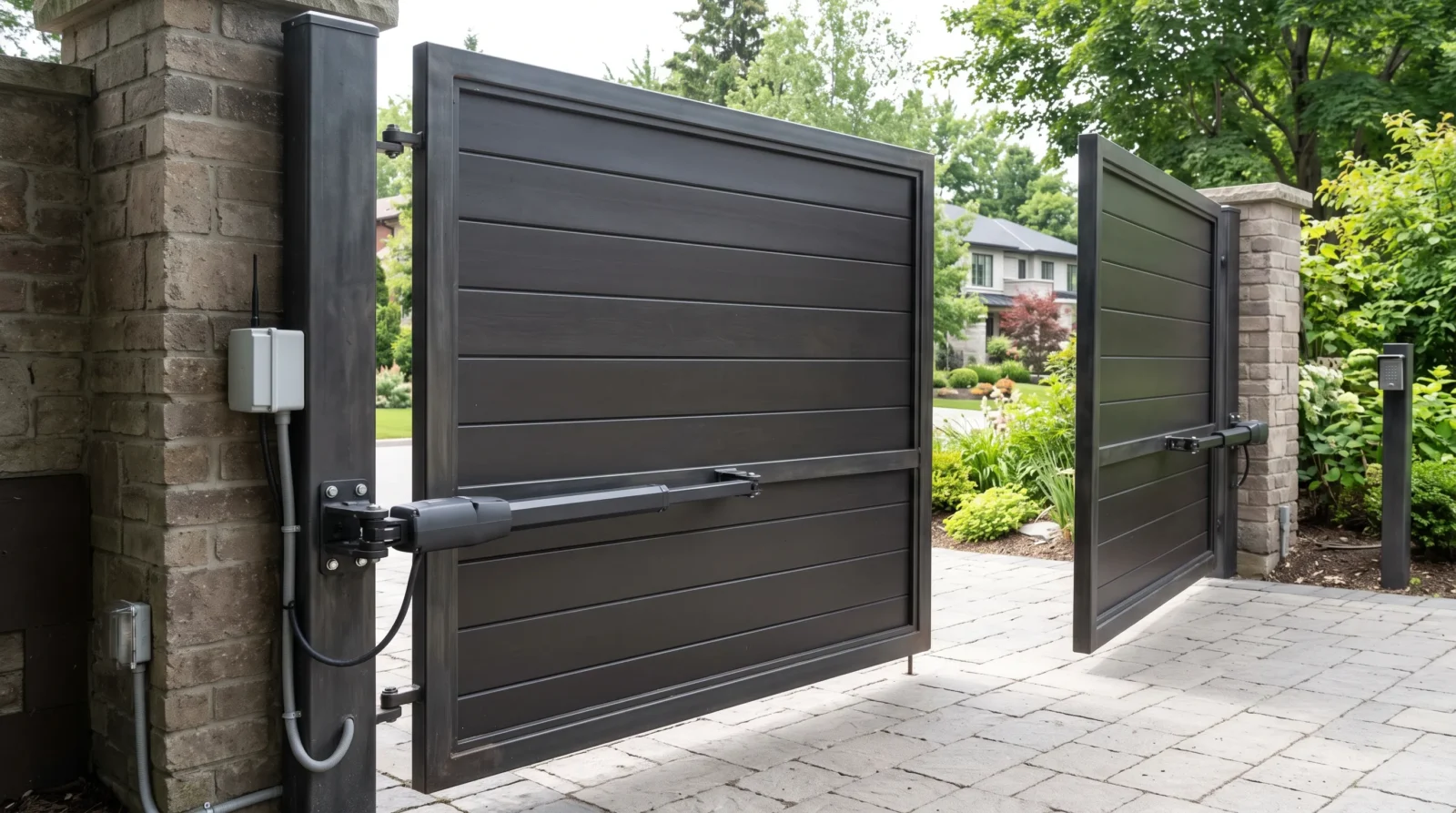
The single best way to make an automatic gate opener last longer is regular, simple maintenance, and most of it takes only a few minutes. The seven tasks that matter most are lubricating the moving parts, keeping the track or hinge path clean, testing the safety sensors and auto-reverse, tightening loose hardware, caring for the battery and backup, protecting the electronics from surges, and booking a yearly professional tune-up. These are the same habits that a good gate service checks on every visit, and the same maintenance logic behind reliable garage door service on the overhead doors elsewhere on your property. Do these on a seasonal schedule and a good opener will reach the top of its 10-to-20-year range instead of failing early. Below is exactly what to do, how often, and which tasks to leave to a pro.
Key takeaways
- Lubrication and keeping the path clear are the two highest-payoff tasks, and the easiest to skip.
- Test the safety sensors and auto-reverse regularly; it protects people and the opener.
- Backup batteries are wear items, plan to replace them every 3 to 5 years.
- Surge protection prevents the most expensive failure, a fried control board.
- Leave force and limit settings, wiring, and internal repairs to a licensed pro.
- A yearly professional tune-up catches problems before they become the warning signs of a failing opener.
1. Lubricate the moving parts
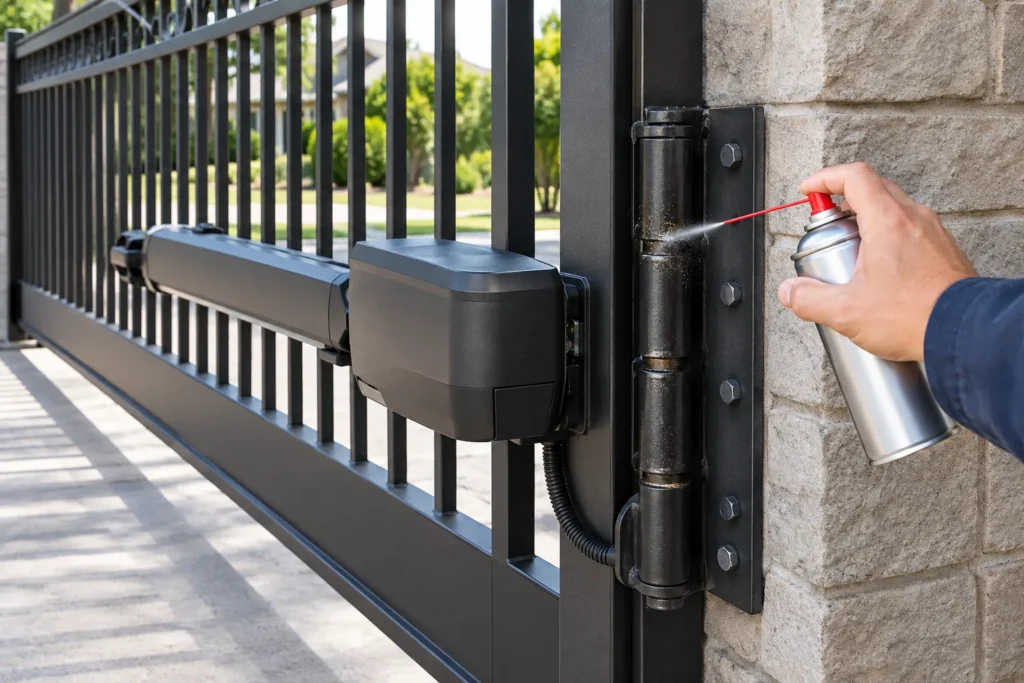
Lubrication is the highest-payoff maintenance task there is, and the one most owners forget. Metal moving against dry metal is what wears out gears, chains, hinges, and rollers years before their time.
How to lubricate an automatic gate opener
Use a proper lubricant (a silicone or lithium-based spray, not WD-40, which is a cleaner and dries out). Apply it to hinges, the chain or the rack-and-pinion drive, rollers, and any pivot points. Wipe off excess so it does not collect grit. Do this every three to six months, and more often in dusty or coastal conditions. A well-lubricated system draws less current and puts less strain on the motor, which is exactly what extends its life.
2. Keep the track or hinge path clean and clear
A clear path is the difference between an opener that glides and one that fights every cycle. Debris in a slide gate’s track or an obstruction in a swing gate’s arc forces the motor to overwork.
Why a clean gate track extends opener life
For slide gates, sweep the track and clear out leaves, rocks, dirt, and anything that has blown in. For swing gates, keep the swing area free of overgrown plants, gravel buildup, and settling soil. Check that the gate is not dragging on the ground. Every obstruction the gate has to push through means more current, more heat, and faster wear on the motor and drive. A quick monthly walk-and-clear is enough for most properties.
3. Test the safety sensors and auto-reverse
Testing the safety system protects both people and the equipment, and it is quick. Photo-eye sensors and the auto-reverse feature are what stop the gate from crushing a car, a pet, or a person, and a drifting sensor also causes nuisance faults.
How to test automatic gate safety sensors
Clean the sensor lenses, confirm both eyes are aligned and show a steady indicator light, and test the auto-reverse by placing a solid object (never a body part) in the gate’s path to confirm it stops and reverses. Do this monthly. If the sensors will not hold alignment or the gate does not reverse, that is a safety issue to address right away. Our note on keeping automatic swing gates safe on driveways covers why this matters.
4. Tighten and inspect the hardware
Vibration from thousands of cycles loosens hardware, and loose hardware accelerates wear on everything around it. Bolts, brackets, hinges, and chain tension all drift over time.
Why tightening gate hardware prevents early failure
Every few months, go over the mounting bolts, hinge fasteners, and brackets and snug up anything that has worked loose. Check the chain or belt tension against the manufacturer’s spec, too tight strains the motor, too loose causes slipping and jerky movement. Look for rust, cracks, or bent components while you are at it. Catching a loose bracket early prevents misalignment that would otherwise chew through the drive.
5. Care for the battery and backup power
The backup battery is a consumable, not a permanent part, and treating it that way prevents surprise lockouts. A dead backup battery is one of the most common reasons a gate quits during an outage.
How often to replace a gate opener battery
Most backup batteries last 3 to 5 years. Check the battery’s age and its terminals (clean off any corrosion), and test that the backup actually powers the gate during an outage. Solar-powered gates need the panel kept clean and unshaded to keep the battery charged. Replace the battery on schedule rather than waiting for it to fail. For how these systems are powered, see what powers an automatic swing gate.
6. Protect the electronics from surges and weather
The control board is the most expensive single part, and surges kill more of them than mechanical wear does. Protecting the electronics is cheap insurance against the priciest repair on an automatic gate operator.
How to protect a gate opener control board
Install a dedicated surge protector on the operator’s circuit, make sure the unit is properly grounded, and keep the control box sealed and free of moisture, dust, and insects (bugs nesting on a board is a surprisingly common cause of faults). In storm-prone areas like Central Texas, surge protection is not optional. This is doubly true for a hard-working slide gate, where regular slide gate service should always include a check of the surge protection and grounding. This one habit prevents the kind of board failure that often signals the whole unit is near the end of its life.
7. Book a professional tune-up once a year
An annual professional service catches the things a visual check misses, and handles the tasks you should not DIY. Some maintenance requires tools, training, and safe handling of electrical and high-force components.
Why a professional gate opener tune-up is worth it
A technician will check and adjust force and limit settings, test motor current draw, inspect wiring and the control board, verify safety compliance, and spot wear you would not catch on your own. Force and limit settings in particular should never be guessed at, they are a safety-critical adjustment. An annual tune-up is the backstop that keeps small issues from becoming the failures covered in How Long Do Automatic Gate Openers Last? 8 Factors That Decide Their Lifespan.
Your gate opener maintenance schedule at a glance
Here is how the seven tasks break down by frequency, and which ones to leave to a pro.
Task | How often | DIY or pro |
Clear the track / swing path | Monthly | DIY |
Test safety sensors and auto-reverse | Monthly | DIY |
Lubricate moving parts | Every 3 to 6 months | DIY |
Tighten and inspect hardware | Every 3 to 6 months | DIY |
Check backup battery and terminals | Twice a year | DIY |
Replace backup battery | Every 3 to 5 years | DIY or pro |
Check surge protection and grounding | Yearly | DIY check, pro to install |
Adjust force and limit settings | Yearly | Pro only |
Full inspection and tune-up | Yearly | Pro only |
The bottom line
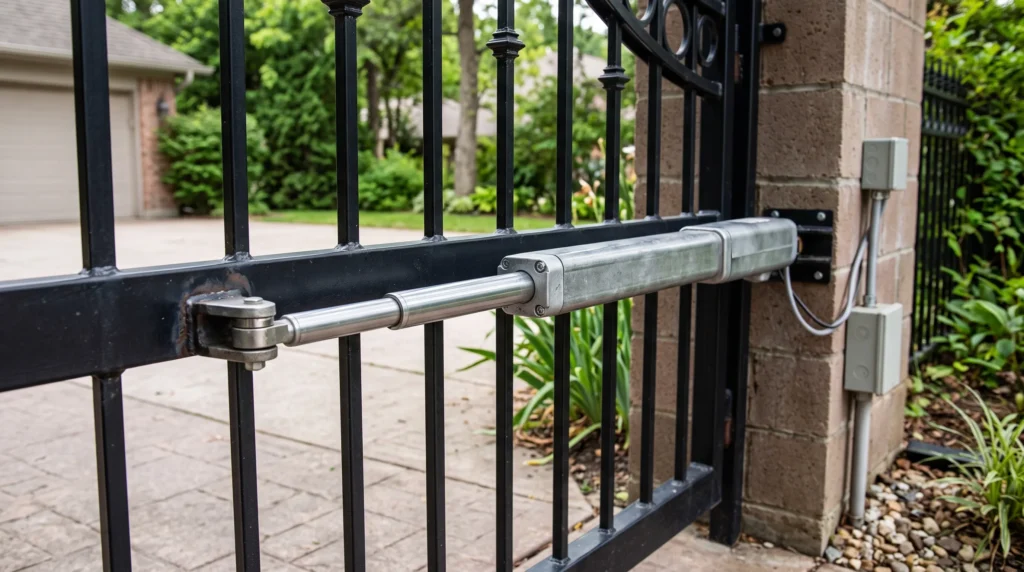
A gate opener does not usually fail because it wore out on schedule, it fails because maintenance got skipped. Lubricate, keep the path clear, test the safety system, tighten what is loose, mind the battery, protect the electronics, and book one professional tune-up a year. That short routine is what separates an opener that lasts 20 years from one that quits in eight.
If you would rather have it handled, or your gate is overdue for a tune-up, R&S Overhead Garage Door of Texas, Inc. offers maintenance and service that keeps your gate running reliably for the long haul. Book a service visit or request a free quote today.