
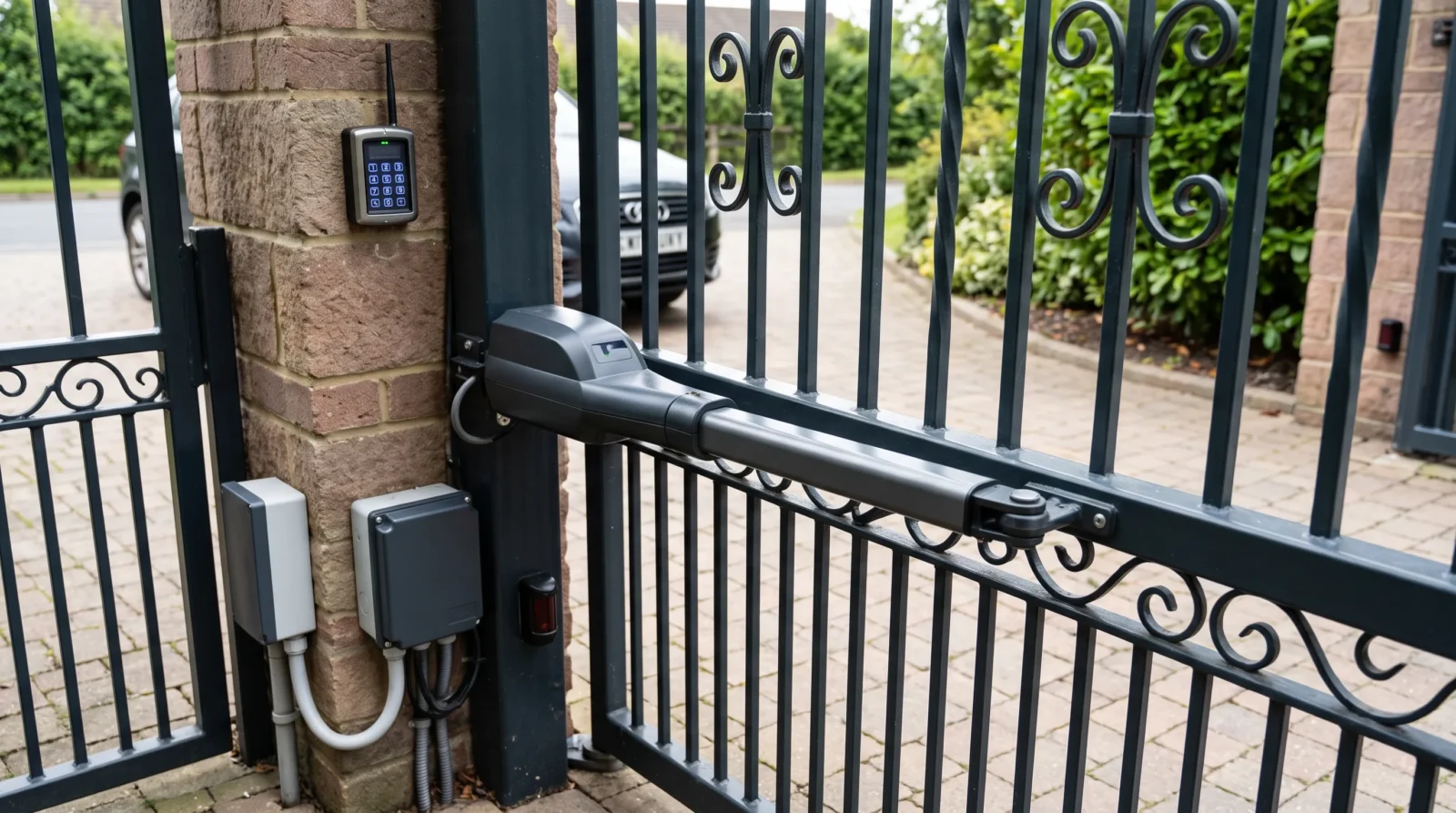
A failing automatic gate opener almost always warns you before it quits. The most common early signs are a remote or keypad that responds intermittently, a gate that moves slowly or hesitates, unusual grinding or clicking noises, a gate that reverses or will not finish closing, and trouble after a power outage. Many of these have simple fixes like a fresh battery, a cleaned sensor, or a tightened connection. Others (a straining motor, a failing control board, or any electrical or burning smell) mean it is time to call a pro before a small problem becomes a full breakdown or a safety hazard. Catching them early is the difference between a quick gate service call and a full replacement, and the same is true for the overhead doors on your property, where routine garage door service prevents the same slow slide into failure. Here are the 8 signs to watch, ordered by how often we see them.
Key takeaways
- Intermittent remote or keypad response is the most common first warning sign, and often the cheapest to fix.
- Slow, hesitant, or noisy operation usually means wear or a lubrication or power issue that is getting worse.
- A gate that reverses on its own or will not close is frequently a safety sensor problem, not a broken motor.
- Trouble right after a storm or outage often points to a surge-damaged board or an aged-out backup battery.
- Stop using the gate and call a pro immediately if you smell burning, see sparks, or the motor runs hot.
- Catching these early is what keeps a repair from turning into a replacement. See how these signs fit into the bigger picture in How Long Do Automatic Gate Openers Last? 8 Factors That Decide Their Lifespan.
1. The remote or keypad works only sometimes
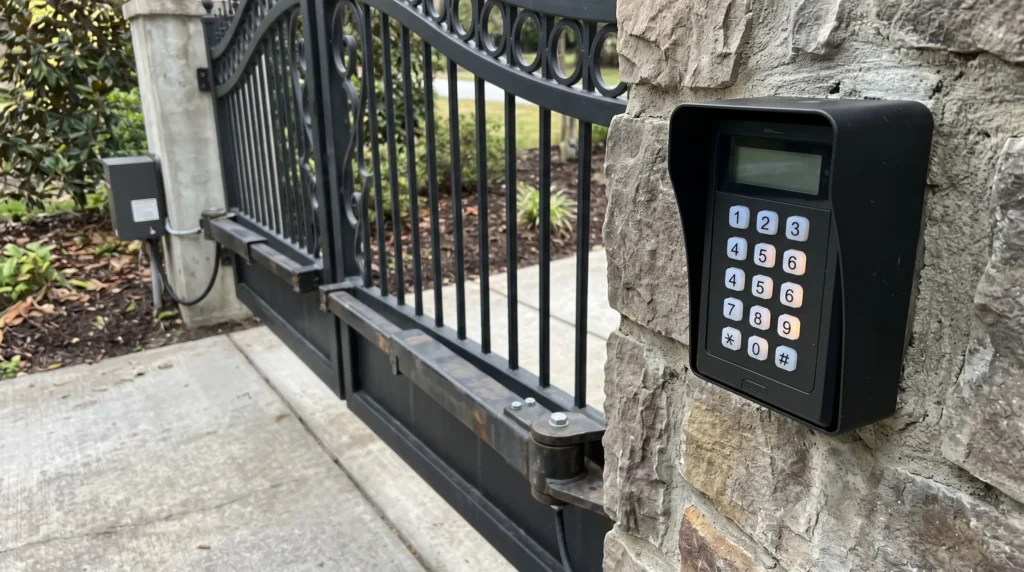
Intermittent response is the single most common early warning sign, and it is one of our most frequent service calls. The gate opens on the third try, or the keypad works in the morning but not the afternoon.
How to fix a gate opener that responds intermittently
Start with the easy stuff: replace the remote and keypad batteries, check that the antenna on the operator is intact and hanging freely, and make sure nothing new nearby (LED lights, a new device) is causing radio interference. Reprogram the remote if a battery change does not fix it. If it still drops out, the receiver or control board may be starting to fail. Call a pro if new batteries and reprogramming do not solve it, that usually points to the board.
2. The gate moves slowly, hesitates, or struggles
A gate that has gotten noticeably slower or hesitates mid-travel is telling you the motor is working harder than it should. This is wear, friction, or a power problem building up over time.
Why your gate opener is slow or hesitating
Common causes are a dragging or misaligned gate, dry or dirty hinges or track, low voltage, or a weakening motor. Clear and clean the track or hinge path, check that the gate swings or slides freely by hand with the opener disengaged, and confirm the power supply is steady. Staying on top of this is exactly what 7 Maintenance Tasks That Make an Automatic Gate Opener Last Longer is built to prevent. Call a pro if the gate moves freely by hand but the opener still struggles, the motor or capacitor may be failing.
3. You hear grinding, clicking, or humming
New or worsening noises are a mechanical warning that should never be ignored. Grinding, clicking, clunking, or a straining hum each point to a different problem.
What gate opener noises mean and how to fix them
Grinding often means worn gears or a chain or rack problem. Clicking can be a relay or a stripped gear. A hum with no movement usually means the motor is getting power but cannot turn, often a seized motor or a bad capacitor. Try lubricating moving parts and clearing debris first. Call a pro if the noise continues after lubrication, or if you hear a hum with no movement, keep using it and you risk burning out the motor.
4. The gate reverses or will not finish closing
A gate that stops partway, reverses on its own, or refuses to close is usually a safety-system issue, not a dead motor. This is a safety feature doing its job, or a sensor that has drifted out of alignment.
How to fix a gate that reverses before closing
Check the photo-eye safety sensors: clean the lenses, confirm they are aligned and facing each other, and clear any obstruction (leaves, a pebble, spider webs) in the gate’s path. Check the force and limit settings if you know how, but do not guess at them. Proper safety behavior matters, our note on keeping automatic swing gates safe on driveways covers why. Call a pro if the sensors are clean and aligned and it still reverses, the force settings or control board likely need professional adjustment.
5. It stopped working after a storm or power outage
Trouble that starts right after a storm or outage almost always traces to the electrical system. This is a very common call in Central Texas after summer storms.
Why your gate opener died after a power outage
The two usual culprits are a power surge that damaged the control board, or a backup battery that has aged out and no longer holds a charge. Check whether the operator has power at all, reset the breaker, and if it runs on a battery backup, remember that battery is a wear item (typically every 3 to 5 years). For how these systems draw power, see what powers an automatic swing gate. Call a pro if power is confirmed at the unit but it still will not respond, the board may be surge-damaged.
6. The safety sensors keep acting up
Sensor faults cause a lot of “my gate is broken” calls when the opener itself is fine. Misaligned, dirty, or failing photo-eyes will stop the gate from closing or make it reverse at random.
How to fix automatic gate safety sensor problems
Wipe the lenses, check that both sensors are level and pointed straight at each other, tighten loose mounting brackets, and inspect the wiring for damage from weather or rodents. A steady indicator light on each sensor usually means they are aligned. Call a pro if cleaning and realignment do not restore a steady signal, or if wiring is chewed or corroded.
7. The motor runs but the gate does not move
When you hear the motor but the gate stays put, the drive connection between the motor and the gate has failed. The motor has power, but the force is not reaching the gate.
Why the motor runs but the gate will not move
Look for a broken or slipped chain, a stripped drive gear, a snapped rack-and-pinion tooth, a sheared coupler, or a manual release that got left disengaged. Confirm the release lever is set to engaged first, that one is an easy fix. Beyond that, the internal drive components usually need replacement. Call a pro if the release is engaged and the motor still spins without moving the gate, that is internal drive damage.
8. Tripped breakers, hot motor, or a burning smell
Any electrical warning sign is a stop-now situation, this is the one category you should not troubleshoot. Repeatedly tripped breakers, a motor that is hot to the touch, scorching around wiring, or a burning smell mean a serious fault in the automatic gate operator.
What to do about gate opener electrical problems
Turn the system off at the breaker and stop using the gate. These symptoms point to a shorted motor, a failing capacitor, or damaged wiring, all of which are fire and shock risks. They are especially common on hard-working slide systems, which is why regular slide gate service focuses on the wiring and electrical connections before they fault. Do not reset the breaker repeatedly to force it to work. Call a pro immediately. This is not a DIY repair under any circumstances.
What you can fix yourself vs. when to call a pro
Use this at a glance. When several signs show up together, or the fix is anything internal or electrical, it is time for a professional.
Warning sign | DIY-safe first step | Call a pro when |
Intermittent remote/keypad | Replace batteries, reprogram, check antenna | It still drops out (board/receiver) |
Slow or hesitating gate | Clean and lubricate, check gate moves freely | Motor struggles on a free-moving gate |
Grinding/clicking noise | Lubricate, clear debris | Noise persists, or hum with no movement |
Reverses / won’t close | Clean and align sensors, clear the path | Force settings or board need adjusting |
Dead after a storm | Reset breaker, check backup battery age | Power is present but unit is unresponsive |
Sensor faults | Wipe lenses, realign, check wiring | Signal won’t stay steady, wiring damaged |
Motor runs, gate still | Confirm manual release is engaged | Drive/gear/chain damage |
Breaker trips / burning smell | Shut it off at the breaker | Always, immediately (do not DIY) |
The bottom line
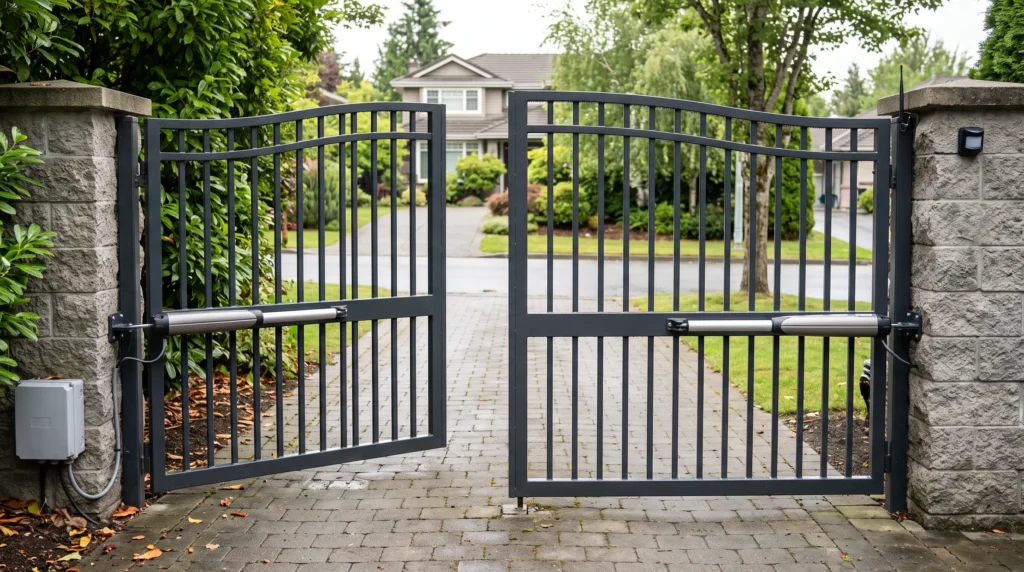
Most gate opener failures give you a warning, an intermittent remote, a slow or noisy cycle, a gate that reverses, or trouble after a storm. Catch these early and many are quick, inexpensive fixes. Ignore them and you risk a dead motor, a fried board, or a safety hazard. When several signs appear together, or anything smells or sounds electrical, stop and get it checked.
If your gate is showing any of these signs, R&S Overhead Garage Door of Texas, Inc. can diagnose it fast and tell you honestly whether it needs a simple repair or a replacement. Book a service visit or request a free quote today.