
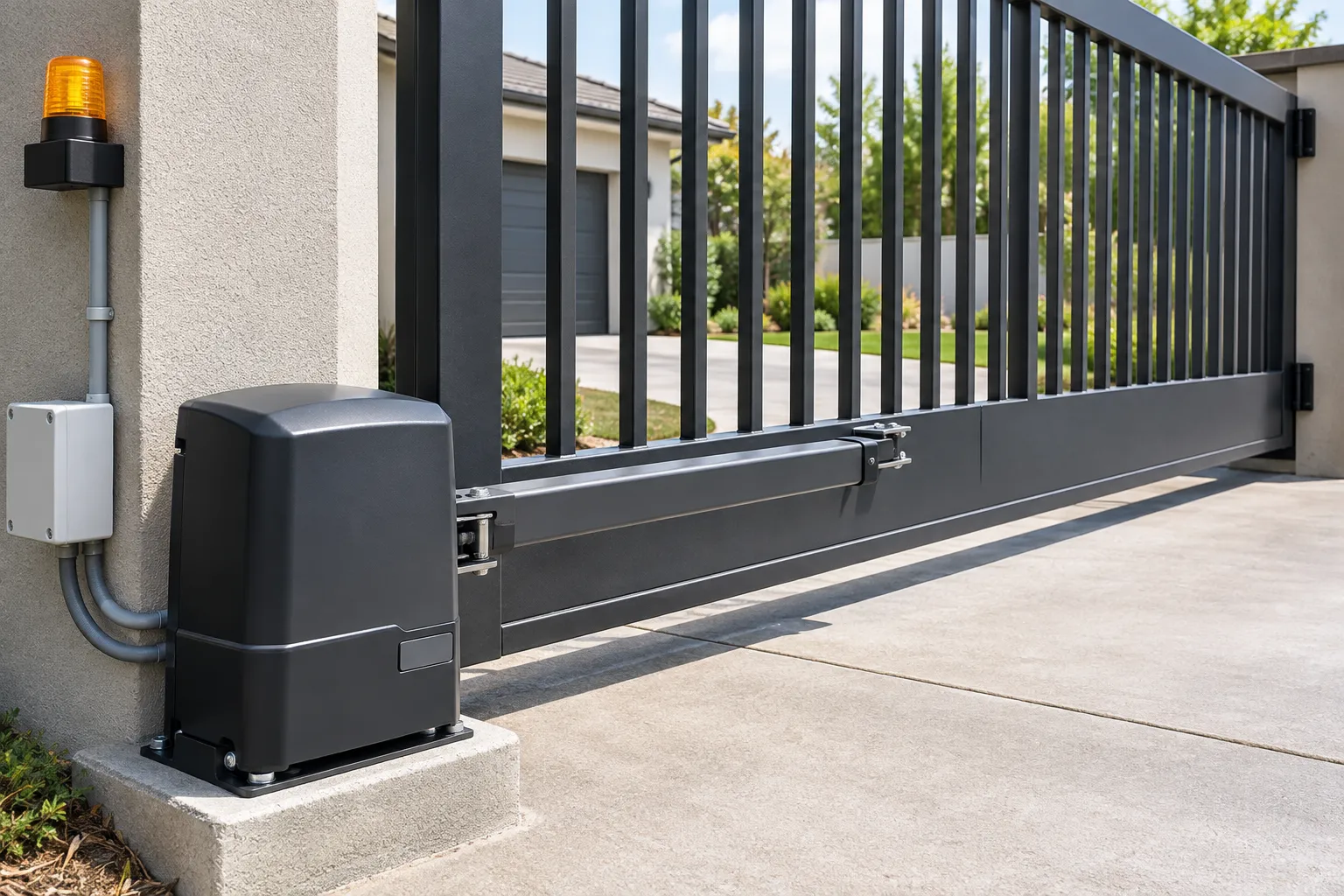
The quick answer: repair a gate opener when it is under about 10 years old, only one part has failed, and the fix costs less than roughly half the price of a new unit. Lean toward replacement when the opener is past 12 to 15 years, the motor or control board has gone, repairs are becoming a habit, parts are hard to find, or it no longer meets current safety standards. A good gate service will lay out both options with real numbers, the same way an honest garage door service does when a homeowner is deciding whether to fix or replace an overhead door. The six questions below (age, what failed, repair cost versus new, repair frequency, parts availability, and safety compliance) walk you through the decision the same way a technician would. Answer them honestly and the right call usually becomes obvious.
Key takeaways
- Age is the first filter: under 10 years usually favors repair, over 12 to 15 usually favors replacement.
- A single failed part is a repair; a dead motor or control board often tips toward replacement.
- The rule of thumb: if the repair costs more than about half of a new unit, replace it.
- Repeated repairs on the same opener are a signal to stop spending and replace.
- Discontinued parts and outdated safety compliance both push toward replacement.
- Good maintenance is what keeps you in “repair” territory longer. See our maintenance guide.
1. How old is the gate opener?
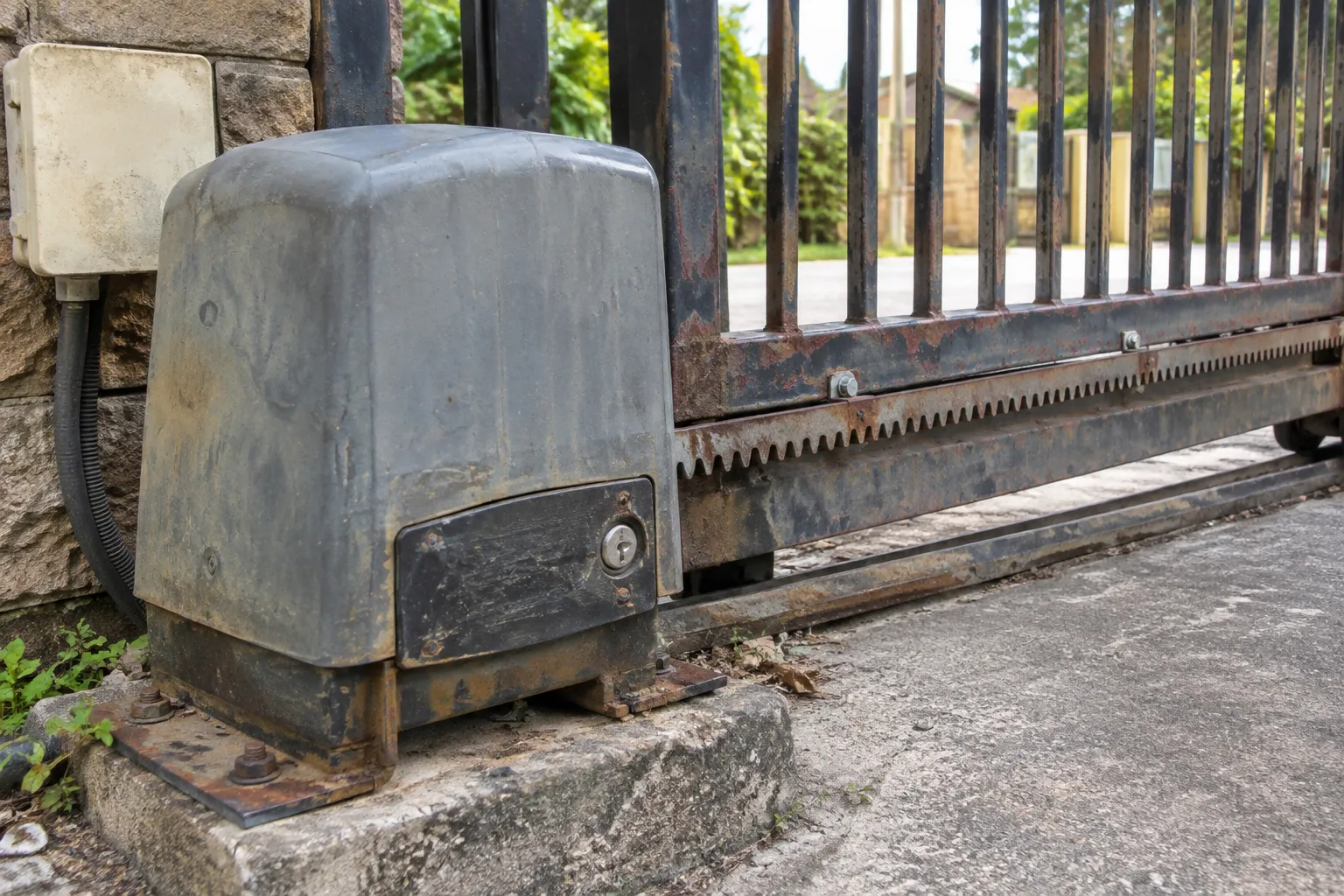
Age is the first and fastest filter in the repair-or-replace decision. Most automatic gate openers last 10 to 20 years residentially, so where yours falls on that curve matters more than any single symptom.
When is a gate opener too old to repair?
Under about 8 to 10 years, an opener usually has plenty of life left, so repairing a failed part is normally worth it. Past 12 to 15 years, you are in the zone where the next failure is rarely the last, and money spent on repairs is money not going toward a unit that will last. For the full picture of what determines that lifespan, see How Long Do Automatic Gate Openers Last? 8 Factors That Decide Their Lifespan.
2. What actually failed?
What broke tells you more than the fact that something broke. A peripheral part is cheap and easy; the two core components are not.
Which gate opener failures are worth repairing?
Remotes, keypads, batteries, sensors, hinges, and rollers are inexpensive, straightforward repairs, fix them and move on regardless of the opener’s age (within reason). The two that change the math are the motor and the control board. When either of those fails on an older unit, the repair often approaches the cost of replacement, which is when replacing the whole opener makes better sense. If you are not sure what failed, the 8 Warning Signs Your Automatic Gate Opener Is Failing (And What to Do) can help you narrow it down.
3. How does the repair cost compare to a new unit?
The clearest financial test is comparing the repair cost to the price of replacement. This single ratio settles most borderline decisions.
The 50 percent rule for gate opener repairs
Our field rule of thumb: if a repair costs more than about half the price of a comparable new opener, replacement is usually the smarter long-term value, because you are paying a large share of a new-unit price to keep an aging one alive. If the repair is a small fraction of replacement cost, fix it. We give you both numbers before any work starts so you can make the call with real figures rather than a guess.
4. How often has it needed repairs lately?
A pattern of repairs matters more than any one repair. One fix on a reliable opener is normal; a third fix in a short span is the unit telling you something.
How many repairs is too many for a gate opener?
When you are calling for service repeatedly, and especially when different parts keep failing, the opener is entering the phase where components wear out faster than you can replace them. At that point continued repairs become a slow, expensive way to arrive at a replacement you will need anyway. Tracking how often the gate acts up (and staying on top of the maintenance guide tells you when the tipping point has arrived.
5. Are replacement parts still available?
A repair is only possible if the parts still exist. Older and discontinued models are the ones most likely to leave you stranded.
What to do when gate opener parts are discontinued
Manufacturers eventually stop making parts for older operators, and third-party substitutes are not always reliable or safe. If the part you need is discontinued, back-ordered for weeks, or only available used, that is a strong push toward replacement, both for the immediate fix and because future repairs will hit the same wall. A newer unit restores full parts availability and warranty coverage.
6. Does it still meet current safety standards?
Safety compliance is the question people forget, and the one that matters most. An older automatic gate operator may predate the safety features expected today.
Why safety standards affect the repair-or-replace choice
Modern automated gate operators are built to UL 325, the U.S. safety standard covering entrapment protection and safe force limits. If your opener predates those requirements or lacks working photo-eye sensors and auto-reverse, that is a safety reason to replace rather than patch, regardless of the other factors. This is especially worth checking on an older slide gate, where a professional slide gate service can confirm whether the safety features still meet current standards. A gate that cannot reliably stop for a person, pet, or vehicle is not worth repairing to keep in service.
Repair or replace: the decision at a glance
Add up where your answers land. A few “replace” boxes, especially on age, core-component failure, or safety, usually settles it.
Question | Lean toward repair | Lean toward replace |
How old is it? | Under 8 to 10 years | Over 12 to 15 years |
What failed? | A single part (remote, sensor, battery, hinge) | Motor or control board |
Repair vs. new cost | Under about half the cost of new | Over about half the cost of new |
How often lately? | First real issue | Repeated repairs in a short span |
Parts availability | In production and in stock | Discontinued or hard to source |
Safety compliance | Meets current UL 325 features | Predates modern safety standards |
The bottom line
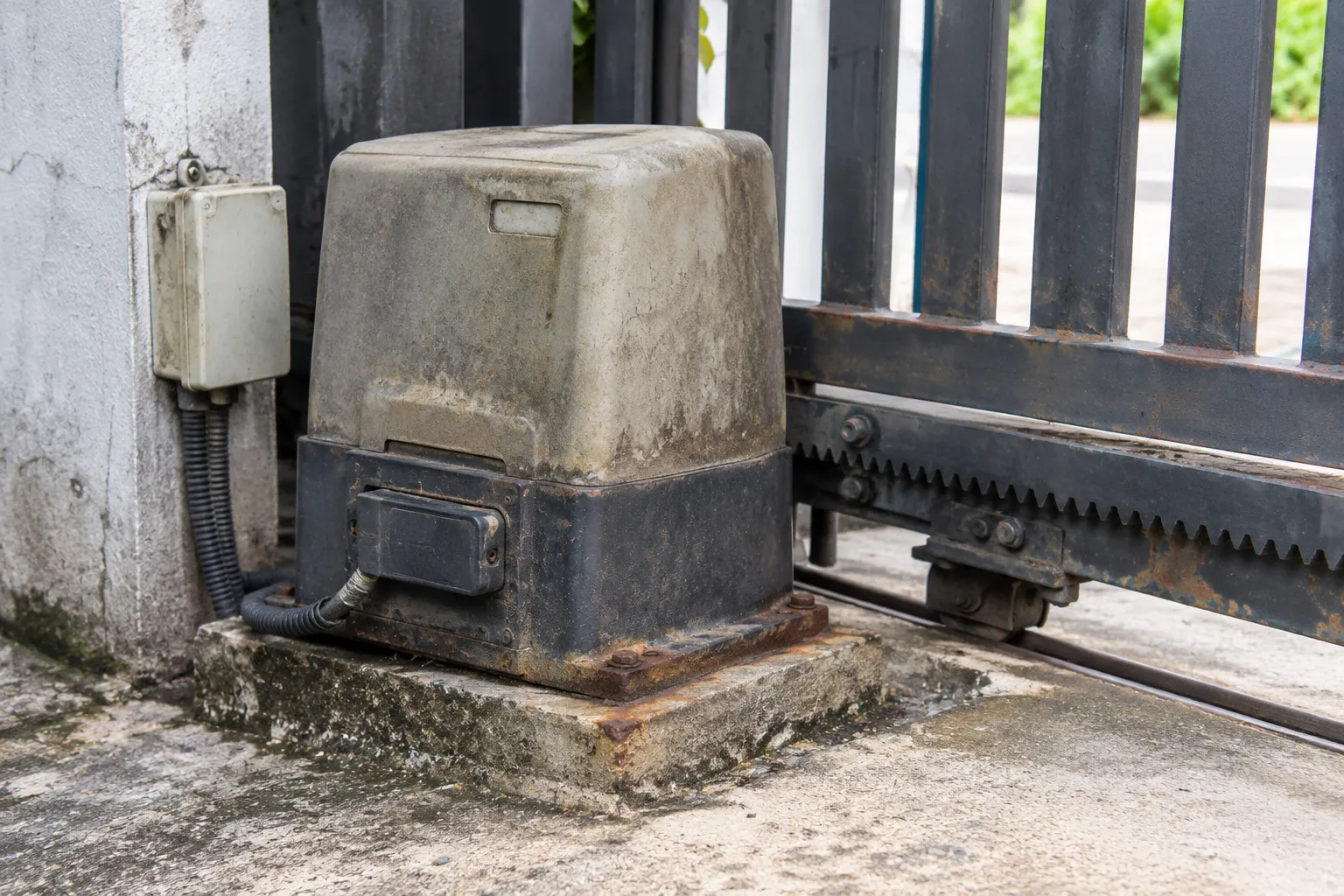
Repair or replace comes down to six honest answers: age, what failed, cost ratio, repair frequency, parts availability, and safety. A newer opener with one failed part and a modest repair bill is almost always worth fixing. An older unit with a dead motor or board, a habit of breaking down, or outdated safety features is usually telling you it is time. When the boxes are split, the cost ratio and safety are the tiebreakers.
If you are weighing a repair against a replacement and want a straight answer, R&S Overhead Garage Door of Texas, Inc. will diagnose the opener, give you real repair and replacement numbers, and tell you honestly which way the math points. Book a service visit or request a free quote today.