
Most automatic gate openers last 10 to 20 years for residential use and around 5 to 10 years for high-traffic commercial or shared-entry gates. The single biggest factor is how many times the gate cycles open and closed each day, followed by whether the opener gets regular maintenance and professional gate service. A well-installed, well-maintained residential opener on a properly balanced gate routinely reaches the top of that range, while a neglected unit in a harsh climate or on an overloaded gate can fail in well under a decade. The same longevity rules apply to overhead doors, so if you are also weighing garage door service, the maintenance principles carry over. Below are the 8 factors that actually decide how long yours will last, and how to tell when it is nearing the end.
Key takeaways
- Typical lifespan is 10 to 20 years residential, 5 to 10 years commercial or high-cycle.
- Daily cycle count (how often the gate runs) is the number one factor in wear.
- Regular maintenance can add years; neglect is the fastest way to cut lifespan short.
- The control board and motor usually fail before the physical hardware does.
- Battery backups and surge protection are consumables, plan to replace batteries every 3 to 5 years.
- When repairs start stacking up, replacement is often the smarter spend.
1. How often the gate cycles each day
Cycle count is the number one predictor of gate opener lifespan. Every open-and-close is one cycle, and every opener is rated for a finite number of them. A suburban home gate that runs 6 to 10 times a day will outlast an apartment or business gate running 200-plus times a day, even if both use the same model.
How gate opener duty cycle affects lifespan
Manufacturers publish a duty cycle or cycles-per-day rating. Match the opener to real traffic and it lasts. Undersize it (a residential-rated unit on a busy shared driveway) and the motor and gears wear out years early. If your gate handles heavy or constant traffic, size up. Our overview of whether automatic swing gates can handle heavy traffic covers how to match the opener to your volume.
2. The type of gate opener you have
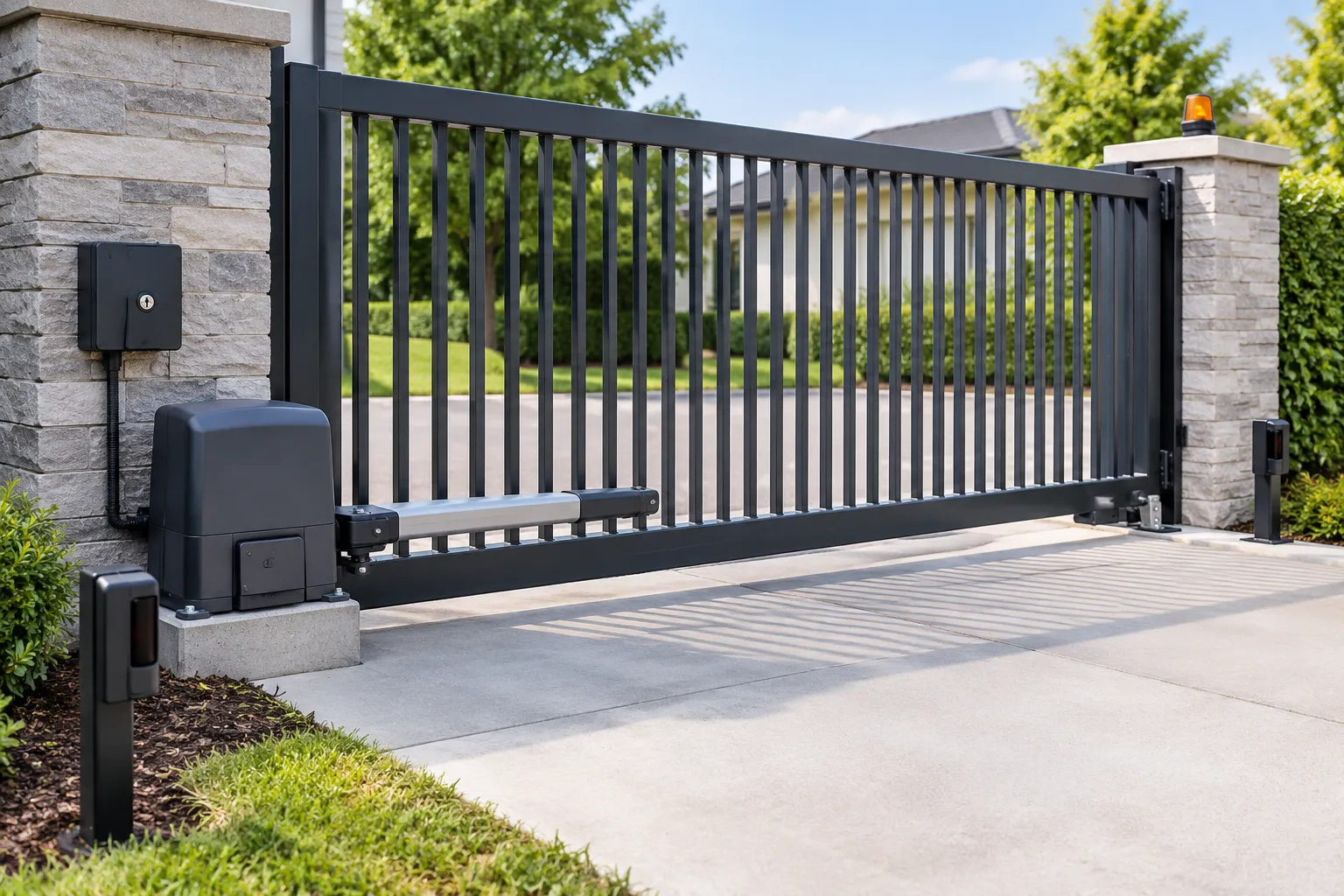
Different opener designs age differently, so the type sets your baseline lifespan before anything else. Swing gate operators, slide gate operators, and barrier arm operators each have different mechanical loads and failure points.
How long do swing vs slide gate openers last?
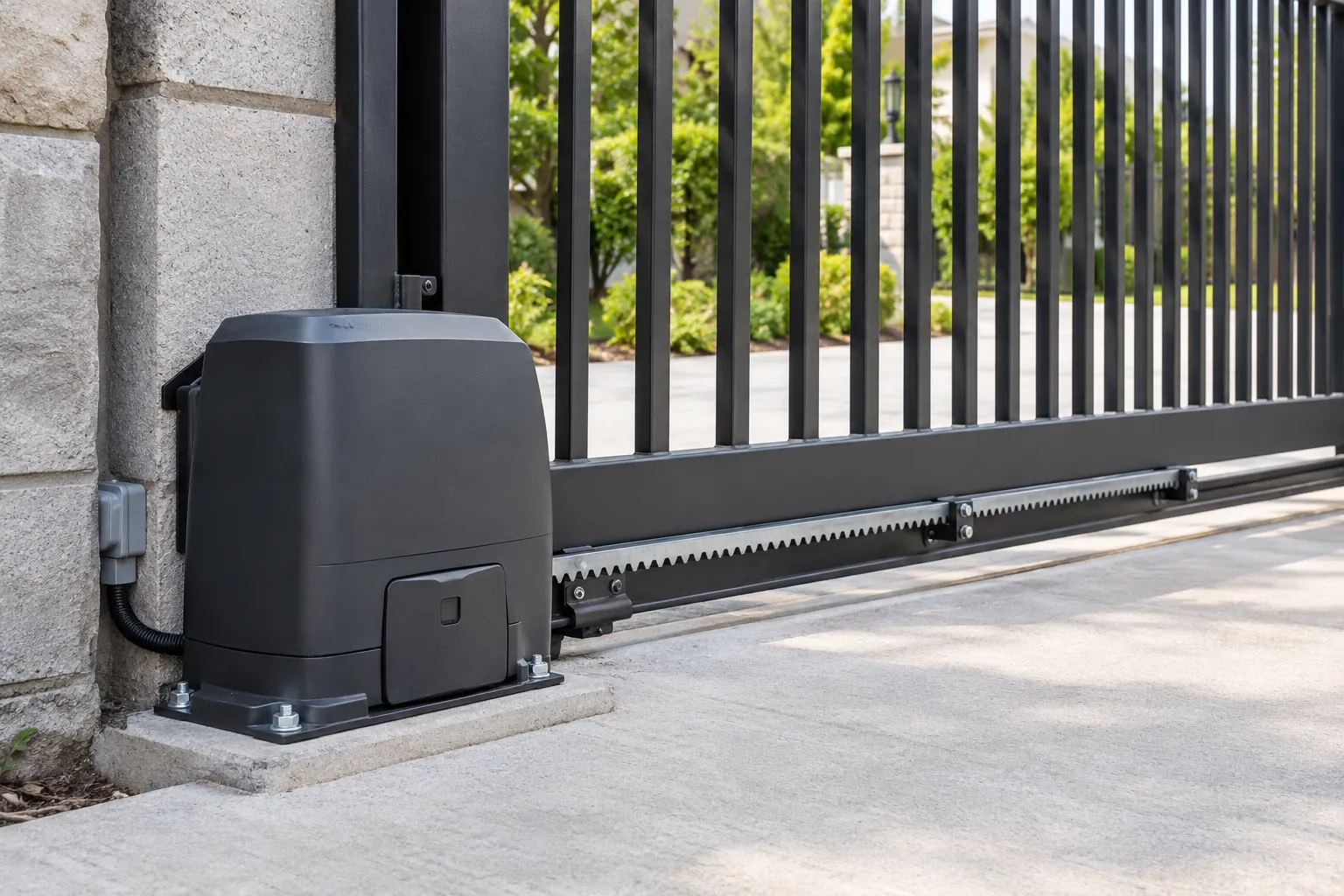
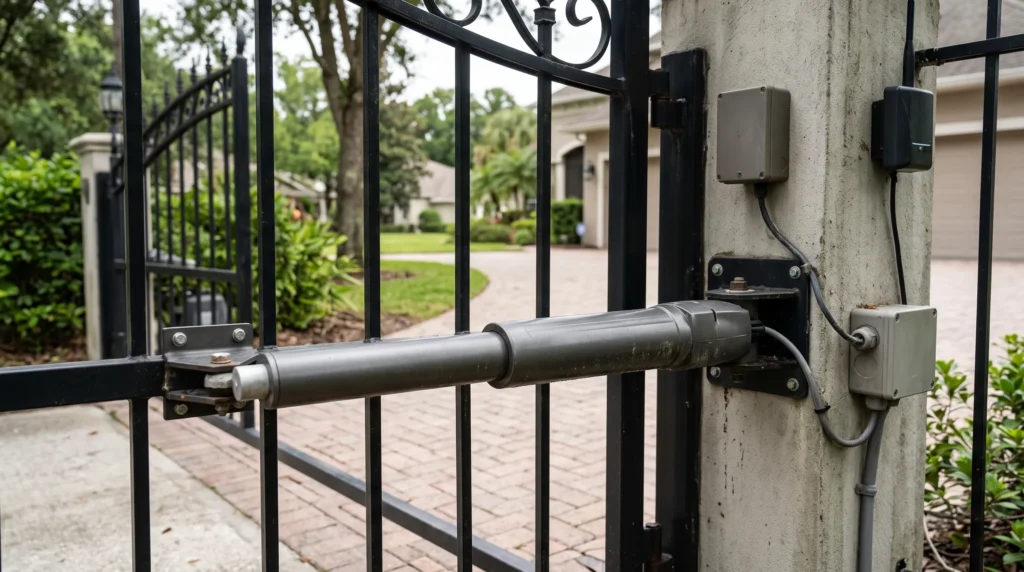
Swing operators (arm or hydraulic) tend to last well when the gate is balanced and the hinges are sound, because the load is steady. Slide operators rely on a chain or rack-and-pinion drive and a clean track, so debris and misalignment are their main lifespan killers. Hydraulic units often run longest in high-cycle settings but cost more up front. If you are still choosing a system, our guide to how automatic swing gates work breaks down the mechanics.
3. Whether you keep up with maintenance
Consistent maintenance is the biggest lifespan factor you actually control. Lubrication, hardware checks, sensor cleaning, and track clearing are cheap, and skipping them is the most common reason an opener dies before its time.
How to make an automatic gate opener last longer
A simple seasonal routine (lubricate moving parts, tighten hardware, clear the track or hinge path, test the safety reverse, and check the battery) prevents small problems from becoming motor-killing ones. Most manufacturers publish a recommended service interval in the owner’s manual, follow it. For the full step-by-step routine, see our 7 Maintenance Tasks That Make an Automatic Gate Opener Last Longer.
4. Your local weather and environment
Climate and site conditions directly shorten or extend opener life. Heat, humidity, salt air, dust, freezing temperatures, and insects all attack electronics and moving parts.
How weather affects gate opener life expectancy
In hot, dusty regions, control boards and motors run hotter and grit works into moving parts, so sealed enclosures and periodic cleaning matter more. In freezing climates, grease stiffens and condensation corrodes contacts. Coastal salt air is especially hard on metal and electronics. You cannot change your weather, but you can spec weather-rated hardware and clean and lubricate more often to offset it.
5. Power quality and surge protection
Electrical problems kill more control boards than mechanical wear does. Power surges, lightning, brownouts, and loose wiring can fry the logic board in an instant, and the board is often the most expensive single part.
Why surge protection extends gate opener lifespan
A dedicated surge protector and clean, correctly grounded power dramatically cut board failures. Solar-powered and battery-backed systems add resilience during outages but introduce their own consumable: the backup battery, which typically needs replacing every 3 to 5 years. For how these systems are powered, see our explainer on what powers an automatic swing gate.
6. Installation quality
A gate opener is only as reliable as its installation. Poor mounting, incorrect force and limit settings, bad wiring, or a mismatched opener guarantees early failure no matter how good the unit is.
Why professional installation improves gate opener lifespan
Correct force limits stop the motor from straining, proper alignment keeps the drive from binding, and code-compliant wiring prevents electrical faults. Professional installs also set up the safety systems required under UL 325, the U.S. safety standard for automated gate operators, which protects both people and the equipment. A rushed DIY or handyman install is one of the most common reasons an opener never reaches its rated lifespan.
7. Gate size, weight, and balance
An out-of-balance or overweight gate forces the opener to overwork, and overwork is what burns out motors. The opener should move the gate, not fight it.
How gate weight and balance affect opener wear
If the gate sags, drags, or has stiff hinges or a dirty track, the motor draws more current and heats up on every cycle. Heavier gates (solid ornamental or wood) demand a stronger operator; putting a light-duty opener on a heavy gate is a recipe for early failure. Keeping the gate itself in good shape, level, freely swinging or sliding, and correctly weighted for the operator, is one of the best things you can do for opener longevity. Our note on keeping automatic swing gates safe on driveways covers balance and safety basics.
8. Motor and control board quality
Component quality sets the ceiling on how long the opener can possibly last. The motor and the control board are the two parts that most often decide the real lifespan of an automatic gate operator.
Why the control board usually fails first
In the field, the electronics (control board, capacitor, receiver) tend to fail before the motor or the physical hardware does, which is why board-level repairs are common on aging openers. Higher-quality operators use better-sealed boards, stronger motors, and more available replacement parts, which is what lets a good unit reach 15 to 20 years. This is especially true for a heavy-duty slide gate, where constant duty cycles make regular slide gate service worthwhile to catch board wear early. When you start replacing electronic parts repeatedly, that is usually the signal the whole unit is near end of life. See our guide to the 8 Warning Signs Your Automatic Gate Opener Is Failing (And What to Do) so you are not caught off guard.
Repair or replace? A quick decision guide
Once an opener starts acting up, the real question is whether to fix it or replace it. Use this at-a-glance guide, and for the full walkthrough see Should You Repair or Replace Your Gate Opener? 6 Questions to Ask First.
Situation | Usually repair | Usually replace |
Age of opener | Under 8 to 10 years | Over 12 to 15 years |
Repair cost vs. new unit | Less than about half the cost of new | More than about half the cost of new |
Failure type | One part (remote, sensor, battery, hinge) | Motor or control board, or both |
Frequency of problems | First real issue | Third repair in a short span |
Parts availability | Parts still made and in stock | Parts discontinued or hard to find |
Safety compliance | Meets current UL 325 safety features | Predates modern safety standards |
Rule of thumb: if the opener is past 12 to 15 years, the fix costs more than half of a new unit, or the motor or board has gone, replacement is usually the better long-term value.
The bottom line
Automatic gate openers generally last 10 to 20 years in residential use and 5 to 10 years in heavy-traffic settings, but the real number comes down to cycle volume, maintenance, power protection, install quality, gate balance, and component quality. Stay ahead of maintenance and protect the electronics, and you will land at the high end of that range.
If your gate opener is aging, acting up, or overdue for service, R&S Overhead Garage Door of Texas, Inc. can inspect it, tell you honestly whether to repair or replace, and get it running reliably. Book a service visit or request a free quote today.