

Most commercial doors are 1 ¾ inches thick. That is the standard commercial door thickness used in stores, offices, warehouses, and schools across the country. The most common standard commercial door size is 3 feet wide by 7 feet tall.
For business owners in Pflugerville, TX, knowing these numbers matters more than it may seem. The right door keeps a building safe, helps it pass local code, and stands up to the hot Texas summers. Strong commercial doors also lower the need for emergency commercial door service down the road. This guide breaks down how thick are commercial doors, what the common sizes are, and what to check before there is a costly problem.
Quick Answer: Standard commercial doors are 1 ¾ inches thick. The most common size is 36 inches wide by 84 inches tall (3 feet by 7 feet). Thickness and size can change based on the door material, the building code, and whether the door is fire-rated.
The Short Answer: Standard Commercial Door Thickness
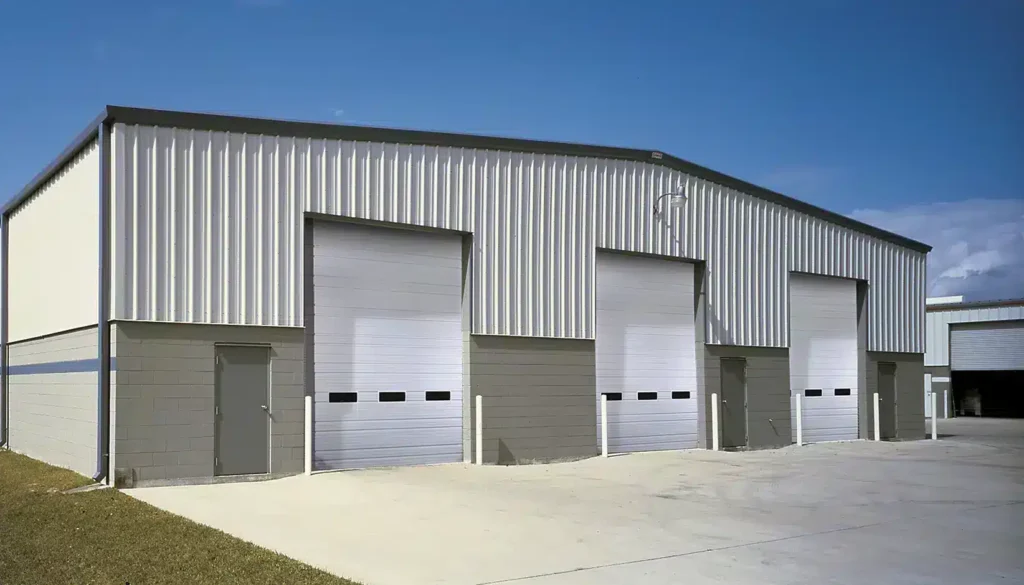
The standard commercial door thickness is 1 ¾ inches. This applies to most steel, wood, and fiberglass commercial doors found in everyday buildings.
This number is not random. Door makers and builders settled on 1 ¾ inches because it gives the door enough strength to handle heavy daily use without being too heavy to swing open. A door in a busy Pflugerville restaurant might open and close hundreds of times a day, so that extra strength counts.
Some doors fall outside this range. A few special doors run thicker, near 2 inches, when extra security or sound control is needed. But for almost every standard project, 1 ¾ inches is the answer to how thick are commercial doors.
Want to see how this stacks up against the doors at home? Check out the guide “How Thick Are Commercial Doors vs Residential Ones?“ for a full side-by-side breakdown.
Why Commercial Doors Are Thicker Than Home Doors
A home door and a commercial door are not built the same way. Most interior home doors are only 1 ⅜ inches thick. The bump up to 1 ¾ inches for commercial use makes a real difference.
Here is why the extra commercial door thickness matters:
- More daily traffic. Stores and offices see far more use than a home. The thicker build holds up longer.
- Better security. A thicker door is harder to force open or kick in.
- Code rules. Many commercial buildings must meet fire and safety codes that call for sturdier doors.
- Hardware support. Heavier locks, panic bars, and door closers need a thick, solid door to anchor into.
So the difference in commercial door thickness is about safety, strength, and meeting the law. That is the experience most building owners learn quickly once a thin door starts to fail.
Curious how fire safety changes the build? The post “How Thick Are Commercial Doors When Fire-Rated?“ dives deeper into what makes those doors special.
Standard Commercial Door Sizes (Width and Height)
The standard commercial door size is 36 inches wide by 84 inches tall, which is 3 feet by 7 feet. This is the size that fits most door frames and meets accessibility rules for wheelchair access.
But commercial door sizes come in a range. Here are the common commercial door dimensions:
Widths:
- 30 inches (2 feet 6 inches)
- 32 inches (2 feet 8 inches)
- 36 inches (3 feet) – the most common
- 42 inches (3 feet 6 inches)
- 48 inches (4 feet)
Heights:
- 80 inches (6 feet 8 inches)
- 84 inches (7 feet) – the most common
- 96 inches (8 feet)
The 36-by-84 standard commercial door size works for most front entries and main doors. Wider doors get used where carts, equipment, or large crowds move through. Taller doors show up in newer buildings with high ceilings, which are common in newer Pflugerville business parks.
When two doors sit side by side as a pair, the total opening is often 72 inches wide. Knowing these commercial door dimensions ahead of time saves trouble during any commercial door installation.
Wondering how the toughest doors are made? The article “How Thick Are Commercial Doors Made of Steel?“ breaks down gauge, strength, and what to expect.
Commercial Door Dimensions by Material Type
The material changes how a door is built, but the basic commercial door dimensions stay close to standard. Here is how the common types compare.
Hollow Metal (Steel) Doors
These are the workhorse of commercial buildings. They keep the standard commercial door thickness of 1 ¾ inches and the 3-by-7 size. Steel doors handle weather, security, and heavy use well, which matters in the Texas heat.
Aluminum and Glass Storefront Doors
Common at retail shops and offices, these often measure around 1 ¾ inches thick at the frame. The glass cuts down on weight while still meeting standard commercial door size rules.
Wood Doors
Solid-core wood doors also hold the 1 ¾ inch standard. They look nice for offices and lobbies but need more care in humid or wet weather.
Fiberglass Doors
These match the standard commercial door thickness and resist rust and dents. They work well for buildings that want low upkeep.
Across all four, the commercial door sizes stay similar. The material mostly changes the look, the cost, and how the door holds up over time.
How Door Gauge Affects Commercial Door Thickness
For steel doors, there is a second number to know: the gauge. Gauge measures how thick the metal skin is, not the whole door.
Here is the tricky part. A lower gauge number means thicker, stronger steel.
- 18 gauge: Lighter duty, good for offices and low-traffic areas.
- 16 gauge: Medium to heavy duty, a common choice for busy doors.
- 14 gauge: Heavy duty, used for high-security or high-traffic spots.
The overall commercial door thickness stays at 1 ¾ inches, but the gauge tells you how tough the door really is. A school or a warehouse in Pflugerville might choose 14 or 16 gauge for the abuse those doors take. Checking the gauge is a smart step before any commercial door replacement.
Special Cases: Fire-Rated and Security Doors
Some doors must do more than open and close. Fire-rated doors are built to slow the spread of fire and smoke, giving people time to get out. These doors usually keep the standard commercial door thickness of 1 ¾ inches but use special cores and seals inside.
- Fire-rated doors carry a label showing how long they can hold back fire, often 20, 45, 60, or 90 minutes. Local code in Texas decides where these doors are required, such as stairwells and shared walls.
- Security doors may run thicker than the standard, sometimes close to 2 inches, with heavier steel and reinforced frames. These commercial door dimensions are built for banks, storage sites, and other high-risk spots.
If a building has fire-rated or security doors, those labels and ratings should never be removed or painted over. That label proves the door meets code, and losing it can cause problems during an inspection.
Signs Your Commercial Door Needs Attention (What to Check)
A commercial door gives warning signs before it fully fails. Catching these early can prevent a bigger headache. Here is what to check.
- The door drags or sticks. This often points to worn hinges or a frame that has shifted.
- Gaps around the edges. Light or air coming through means the seals are worn, which drives up cooling bills in the Texas summer.
- Loud noises. Grinding or squeaking can mean dry or damaged hinges and hardware.
- A door that will not latch. This is a security and code problem and should be looked at fast.
- Rust or dents on steel doors. Surface rust is common, but deep rust weakens the door.
- A slow or slamming door closer. A closer that no longer works right can be a safety risk, especially on fire-rated doors.
Walking the building once a month and checking these items is good practice. Writing down what looks off helps a technician fix the right problem faster. Spotting these signs early often means a simple repair instead of a full commercial door replacement.
Tips to Avoid Common Commercial Door Problems in Pflugerville, TX
The Central Texas climate puts real stress on commercial doors. Hot summers, sudden storms, and humid spells all take a toll. These tips help business owners avoid the most common problems.
- Keep hardware tight. Loose screws on hinges and handles are the start of bigger trouble. A quick check each season helps.
- Watch the weather seals. In Pflugerville heat, worn seals let cool air escape and raise energy costs. Replacing seals is a small fix that saves money.
- Do not ignore small drags. A door that drags a little today can warp the frame later. Early attention keeps repair costs low.
- Clean steel doors. Wiping down doors and clearing dirt helps prevent rust, which spreads fast in humid weather.
- Schedule a yearly check. Having a trained commercial door technician inspect doors once a year catches hidden issues. The average cost of a yearly service visit is far lower than the cost of an emergency repair.
A door problem rarely fixes itself. Small habits like these protect the standard commercial door thickness and strength that keep a building safe. For anything beyond a loose screw, calling a licensed pro is the safer route, since door springs, closers, and fire-rated parts can be dangerous to handle without training.
When to Consider Commercial Door Replacement or Installation
Repairs work well for many problems, but there comes a point when a new door is the better choice. Here are the signs it may be time for commercial door replacement.
- Repeated breakdowns. Fixing the same door over and over often costs more than a new one in the long run.
- Deep rust or rot. Once the door body is damaged through, repair will not bring back the strength.
- Code changes. If a building no longer meets fire or accessibility code, new doors may be required.
- A remodel or expansion. Growing a business often calls for new commercial door installation with the right commercial door sizes for the updated space.
A proper commercial door installation does more than hang a door. It makes sure the frame is square, the hardware fits, and the door meets local code. Getting the commercial door dimensions right the first time avoids gaps, drafts, and failed inspections.
The average cost of commercial door replacement depends on the material, the size, and the hardware needed. A licensed local company can measure the opening, confirm the right standard commercial door size, and handle the install the right way. For Pflugerville businesses, working with a local pro also means faster service when something goes wrong.
Getting Commercial Door Thickness and Sizes Right
So, how thick are commercial doors? The standard commercial door thickness is 1 ¾ inches, and the most common standard commercial door size is 3 feet by 7 feet. From there, commercial door sizes and commercial door dimensions shift based on the material, the gauge, and any fire or security needs. Other types, like rolling doors and roll up curtain doors, follow their own sizing rules built for wide openings and heavy use.
Knowing these numbers helps Pflugerville business owners make smart calls, pass inspections, and keep their buildings safe. Checking doors often and acting on small problems early keeps repair costs down and pushes off the need for a full commercial door replacement. This is just as true for swing doors as it is for rolling doors and roll up curtain doors.
When the time comes for a repair, a new door, or a fresh commercial door installation, a trusted local commercial door company in Pflugerville, TX can measure the space, match the right commercial door thickness, and get the job done right.
Your Trusted Local Commercial Door Experts in Pflugerville, TX
 That trusted local team is R&S Overhead Garage Door of Texas, Inc. With years of hands-on experience serving Pflugerville, TX and the surrounding area, our crew knows local code, the Texas climate, and the right commercial door sizes for any building. We take pride in honest service, quality work, and getting the job done right the first time. Contact us today or give us a call to schedule your commercial door service.