
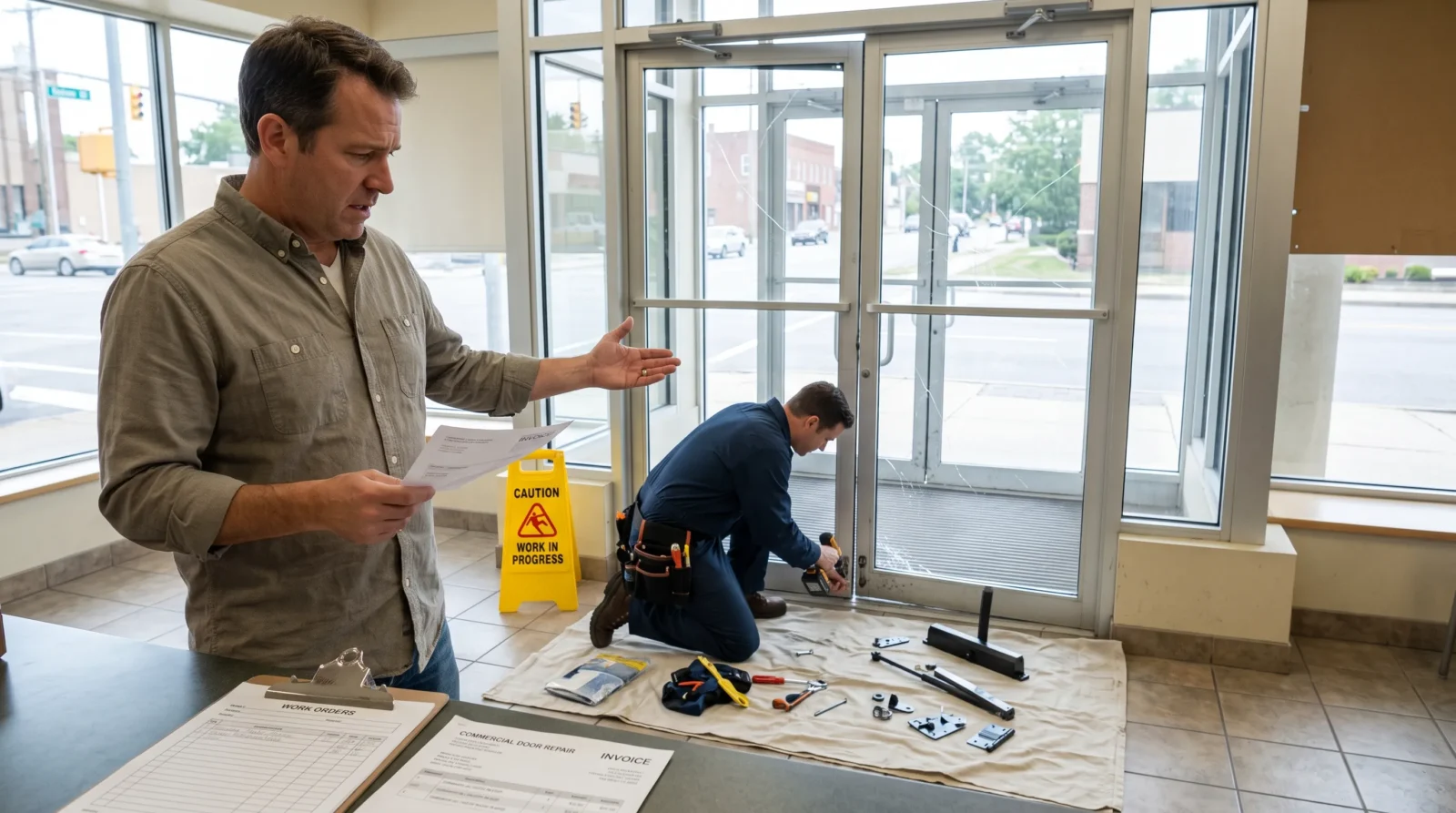
A commercial door repair bill usually runs high for one of three reasons: the work was performed after hours, the scope expanded on site without written approval, or the invoice contains charges that were never disclosed upfront. The first is legitimate and normal. The second and third are worth questioning. The fastest way to find out which applies is to lay the invoice next to the written quote and identify every line that was not on it. If there was no written quote, that absence is the actual problem, and it is the one worth fixing before the next service call.
Key takeaways
- Reconcile the invoice against the written quote before it reaches accounts payable. Once a bill is 60 days old, disputing it gets significantly harder.
- After-hours and emergency rates are standard across the industry. The question is whether they were disclosed before the technician was dispatched, not whether they exist.
- Parts markup is normal and expected. Markup that is many times the going rate for a stocked component is not.
- Any work beyond the approved scope should have triggered a stop and a new written approval. If it did not, say so in writing.
- Ask for the invoice to be itemized if it arrives as a single number. You are entitled to know what you paid for.
- Emergency calls are where facilities get overcharged, so the most effective cost control is reducing emergencies rather than negotiating invoices.
Most high bills are not fraud. They are the predictable result of an urgent call placed under pressure with nothing in writing. The seven charges below are ordered by how often they appear on disputed invoices, starting with the most common.
1. The trip charge, dispatch fee or service call fee
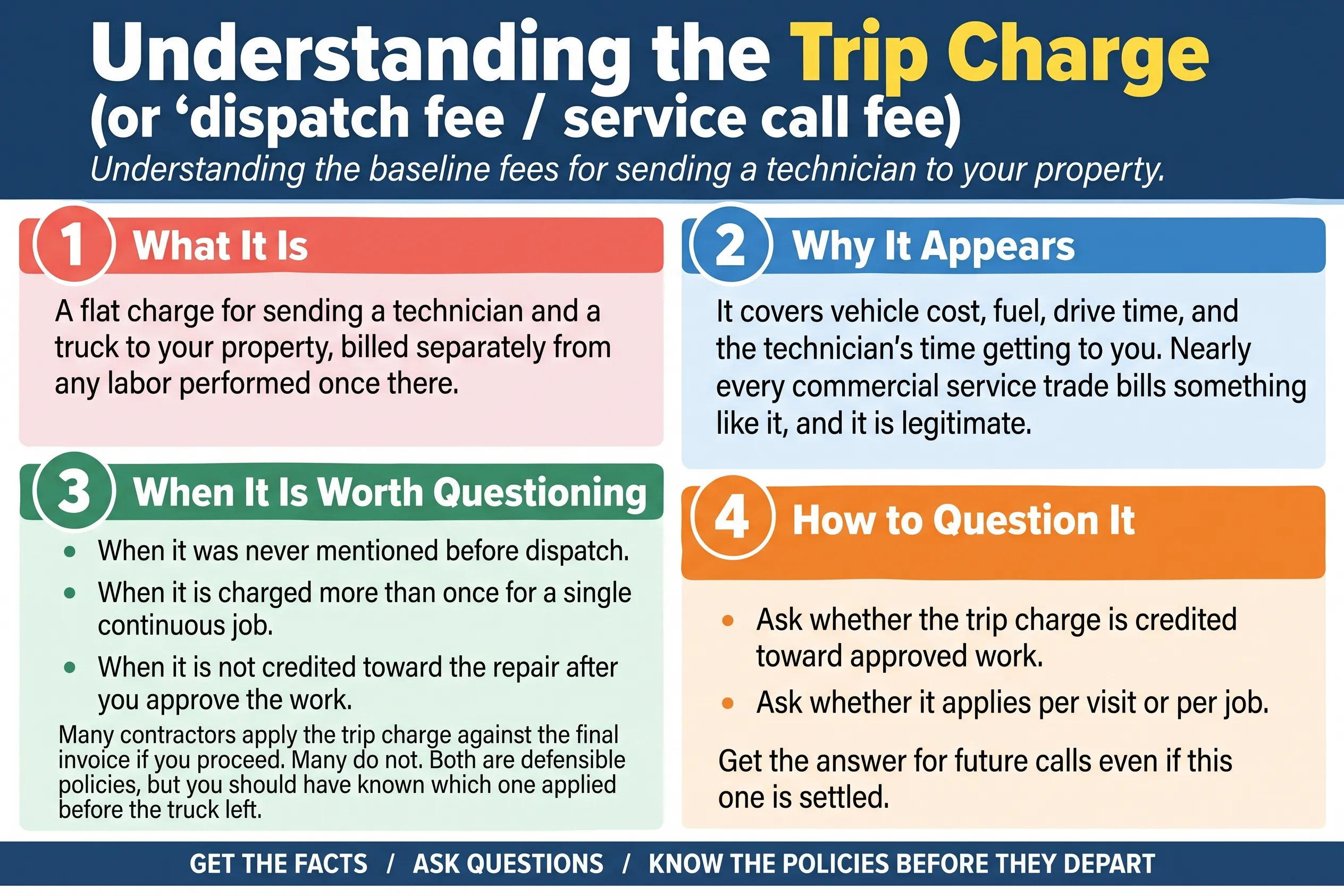
What it is: a flat charge for sending a technician and a truck to your property, billed separately from any labor performed once there.
Why it appears: it covers vehicle cost, fuel, drive time and the technician’s time getting to you. Nearly every commercial service trade bills something like it, and it is legitimate.
When it is worth questioning: when it was never mentioned before dispatch, when it is charged more than once for a single continuous job, or when it is not credited toward the repair after you approve the work. Many contractors apply the trip charge against the final invoice if you proceed. Many do not. Both are defensible policies, but you should have known which one applied before the truck left.
How to question it: ask whether the trip charge is credited toward approved work, and whether it applies per visit or per job. Get the answer for future calls even if this one is settled.
Is a commercial door repair trip charge normal
Yes, and a contractor who does not charge one has usually built it into the labor rate instead. What matters is disclosure. A trip charge stated on the phone before dispatch is a normal cost of doing business. A trip charge that first appears on the invoice is a disclosure failure, and it is worth pushing back on for that reason alone.
2. After-hours, weekend and emergency rate multipliers
What it is: a higher labor rate applied outside standard business hours, typically evenings, weekends and holidays, and often a separate emergency rate for immediate response.
Why it appears: after-hours work costs the contractor more in overtime wages and on-call staffing. Emergency response means holding capacity in reserve. These rates are standard across commercial service trades.
When it is worth questioning: when the multiplier was not disclosed, when a job that started after hours continues into normal hours and stays at the elevated rate, or when the call was not actually an emergency by any definition and was scheduled at premium rates anyway.
How to question it: ask what hours the standard rate covers, what the after-hours multiplier is, and whether the rate steps back down when business hours begin. Ask whether the job could have waited until morning at the standard rate. Sometimes the honest answer is yes, and knowing that changes how you handle the next failure.
How after-hours commercial door repair rates should work
The reasonable structure is a defined standard-hours window, a stated multiplier outside it, and a rate that reverts when standard hours resume. If a technician arrives at 4am and works until noon, the bulk of that job should not be billed at the emergency rate. Ask how the transition is handled before you authorize the call, not afterward.
3. Parts markup
What it is: the difference between what the contractor pays for a component and what appears on your invoice.
Why it appears: markup covers procurement, inventory carrying cost, warranty exposure and the value of having the part on the truck rather than on order. A contractor who stocks parts locally has real money tied up in inventory, and that is precisely what saves you days of downtime.
When it is worth questioning: when the markup on a common stocked component is several multiples of what the part sells for openly, or when a part is billed as special-order at a premium and then installed the same day from the truck.
How to question it: ask for the part number and manufacturer on the invoice. That single request resolves most parts disputes, because a legitimate contractor provides it without hesitation and the number lets you sanity check the price. Do not expect to pay retail. Do expect the number to be explainable.
What is a reasonable parts markup on commercial door repair
There is no single industry figure, and any contractor quoting one as a rule is oversimplifying. What is reasonable depends on whether the part was stocked, special-ordered, freighted, or pulled from a manufacturer channel that carries warranty obligations. The check is not the percentage. The check is whether the contractor will name the part and explain the price. Genuine manufacturer parts for a commercial door also carry warranty standing that aftermarket substitutes do not, which is part of what you are paying for.
4. Minimum labor hours and flat-rate billing
What it is: either a minimum number of billable hours regardless of actual time on site, or a flat book rate assigned to a task rather than time actually worked.
Why it appears: minimums exist because a technician committed to your job is unavailable for others. Flat rates exist because they make pricing predictable and remove the incentive to work slowly.
When it is worth questioning: when you were billed four hours for a twenty-minute sensor alignment with no minimum disclosed, when flat rate and hourly appear on the same invoice for the same work, or when the flat rate assigned does not match the task performed.
How to question it: ask which model they bill on and what the minimum is. Then ask which was applied to your job. Mixing the two on one invoice is the specific thing to watch for, because it can double-bill the same labor.
Why commercial door repair labor charges can seem high for short jobs
A short repair on a commercial door frequently follows a long diagnosis. Intermittent faults, control issues and safety system failures can take longer to find than to fix, and that diagnostic time is real work. The distinction worth drawing is between billed diagnostic time, which is legitimate, and a minimum applied silently to a job that took twenty minutes start to finish.
5. Return trip charges when the part was not on the truck
What it is: a second trip charge, and sometimes a second minimum labor charge, when the technician has to leave and come back with a component.
Why it appears: nobody stocks every part for every manufacturer. Special-order and low-volume components genuinely require a return visit.
When it is worth questioning: when the part was a common wear item that a commercial contractor should reasonably stock, or when you were not told a return trip would carry a second charge. This is where local inventory becomes a financial issue rather than a convenience one. A contractor servicing commercial overhead door equipment from a real local facility carries rollers, hinges, bearings, sensors and common boards. One dispatching from three counties away carries considerably less.
How to question it: ask what they stock for your make and model, and whether return trips for non-stocked parts carry an additional charge. Build the answer into how you choose a contractor next time.
How to avoid return trip charges on commercial door service
Give the contractor the make, model and serial number from the data plate when you call, along with a clear description of the symptom. That single step lets them load the likely parts before dispatch and prevents a meaningful share of return trips. Photograph the data plate once and keep it in your facility records.
6. Shop supplies, fuel surcharges and disposal fees
What it is: small ancillary line items covering consumables, fuel, environmental disposal and similar overhead, often billed as a percentage or a flat add-on.
Why it appears: they are real costs. Lubricants, fasteners, sealants and disposal of old components all cost money, and some contractors itemize them rather than folding them into labor.
When it is worth questioning: when they appear as an unexplained percentage of the total, when they scale with the invoice size rather than with actual materials used, or when several overlapping fees stack on the same job.
How to question it: ask what each fee covers and how it is calculated. A structured answer is a good sign. An improvised one is not. These charges are individually small, which is exactly why they go unexamined, and why they are a common place for padding.
Which commercial door repair fees are legitimate overhead
The test is whether the fee existed as published policy before your job or appeared because of it. Ask for the fee schedule. Contractors running formal commercial door service agreements almost always have one documented, because their clients require it. If nobody can produce a schedule, the fee was probably improvised.
7. Work performed beyond the approved scope
What it is: components replaced or repairs made that were not on the quote you approved, appearing on the invoice as completed work.
Why it appears: sometimes genuine hidden damage surfaces once a door is opened up. Sometimes a technician makes a judgment call to save a second visit. And sometimes it is simply unauthorized work billed after the fact.
When it is worth questioning: always, if you did not approve it in writing. Even when the work was necessary and the price was fair, the process failure matters, because a contractor who expands scope without approval once will do it again on a larger job.
How to question it: put it in writing. State what you approved, identify the added items, and ask for the justification and the approval record. If genuine hidden damage was found, ask why work continued instead of stopping for a new quote. This is the charge most likely to be adjusted when challenged, because the contractor generally cannot produce an approval that does not exist.
What to do about unauthorized commercial door repair charges
Raise it in writing, promptly, and before payment if possible. Reference the original written scope, list the items that were not on it, and ask for either the written approval or an adjustment. Keep it factual rather than accusatory. Most legitimate contractors will correct a genuine scope overrun, because their alternative is a documented dispute with a commercial client. If the contractor cannot produce a written quote at all, that is the point at which the conversation shifts from a billing question to a vetting question, covered in How Do I Know If a Commercial Door Company Is Legit? 8 Things to Check Before You Call.
Normal charge versus charge worth questioning
Use this to triage an invoice line by line.
Charge | Normal form | Worth questioning |
Trip or dispatch fee | Disclosed before dispatch, once per visit, policy on crediting stated | First appears on the invoice, or billed multiple times for one job |
After-hours or emergency rate | Defined hours window, stated multiplier, reverts at standard hours | Undisclosed, or applied to the entire job including standard hours |
Parts markup | Part number provided, price explainable, genuine components | No part number given, or multiples of open market price on a stocked item |
Labor | One billing model, minimum disclosed upfront | Flat rate and hourly on the same work, or an undisclosed minimum |
Return trip | Special-order or uncommon part, charge disclosed in advance | Common wear item a commercial contractor should stock |
Shop supplies and fees | Published fee schedule, tied to actual materials | Unexplained percentage, or several overlapping fees stacked |
Added scope | Work stopped, new written quote, your approval on record | Completed without written approval, justified afterward |
One line applies to every row: if it was not disclosed before the work and it is not on the written quote, you are entitled to an explanation in writing.
The cheapest invoice is the one you never needed
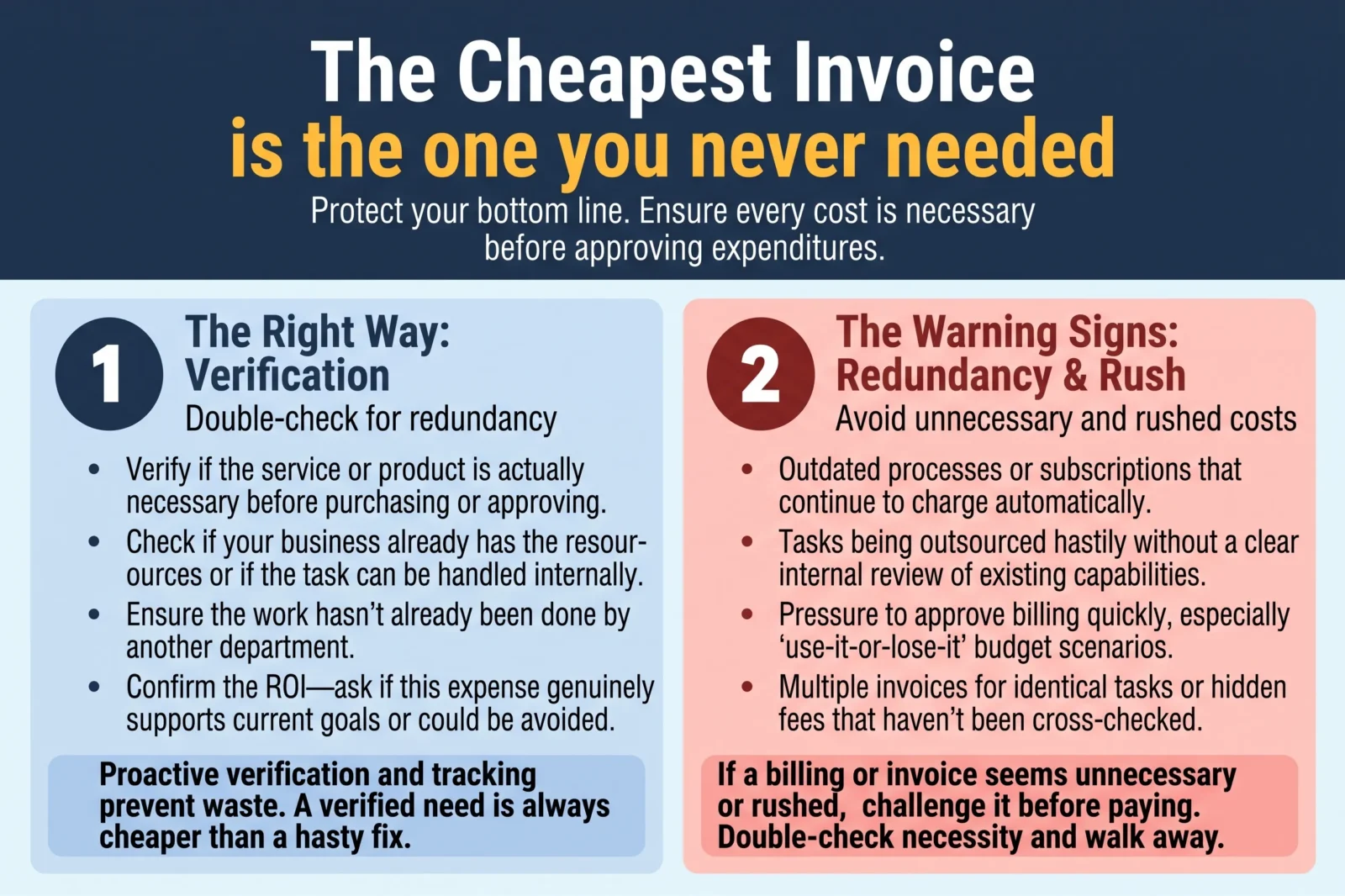
Almost every disputed commercial door bill traces back to the same origin. A door failed unexpectedly, someone called whoever answered, work proceeded verbally under time pressure, and the invoice arrived weeks later. Nothing in that sequence involves fraud, and it still reliably produces the highest bills a facility pays.
Two things change the pattern. The first is a written, itemized quote before any work begins, every time, without exception. The second is reducing the number of emergency calls in the first place, which is where the real money sits. It is worth understanding what causes frequent commercial door repair issues, because most recurring failures have a root cause that scheduled service catches early. The same logic drives preventing downtime through planned commercial door repair, and it is why rolling doors specified correctly reduce maintenance challenges over their service life. Where equipment quality is concerned, the long lifespan of quality commercial rolling doors is the clearest argument against buying on price alone.
A high bill is sometimes a symptom of a different question entirely, which is whether the equipment should be repaired again at all. If a commercial motor operator is generating repeated service calls, the honest analysis is in Should I Repair or Replace My Commercial Door Operator? 6 Signs You’re Being Upsold. And if the invoice looks less like a pricing dispute and more like a pattern, the broader set of tactics is documented in How to Avoid Commercial Door Repair Scams.
These billing patterns are not local. The International Door Association’s scam awareness materials and ongoing industry alerts from the International Door Association describe the same tactics appearing across markets, and Clopay’s buyer guidance on door repair scams covers the pricing side from the customer’s perspective.
If you manage a commercial property in Central Texas and want itemized written quotes, disclosed rates and no charges that appear for the first time on an invoice, R&S Overhead Garage Door of Texas, Inc. serves Travis, Hays, Burnet and Bastrop counties with licensed technicians and locally stocked parts.
Request a free written quote for your commercial door service and see the full scope, rates and fees before any work begins.